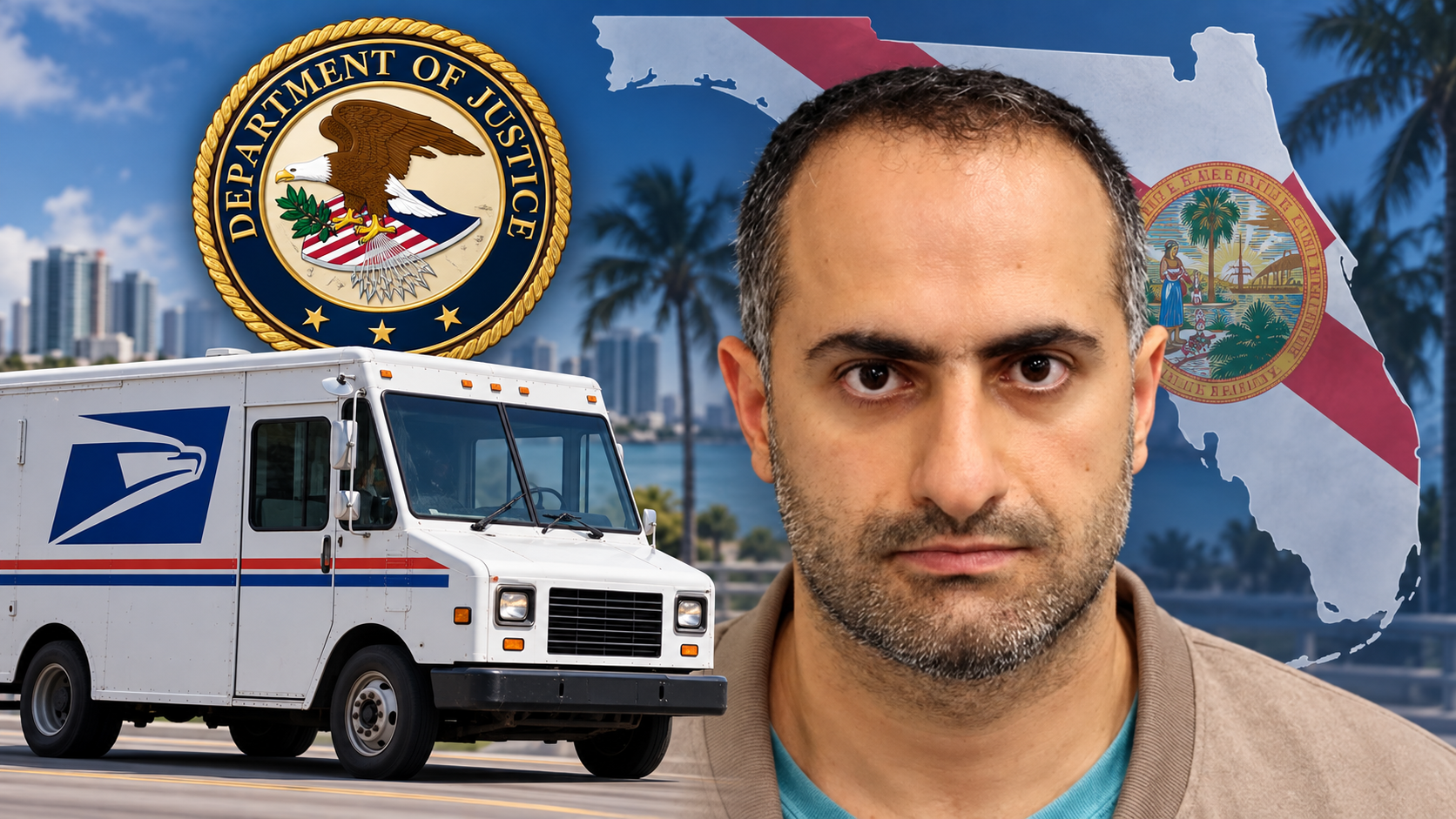
Khayyam Farajov built a seven-figure fraud on a USPS spot-freight platform, and a USPS OIG audit had already told the agency its vetting controls couldn’t stop it.
On October 9, 2026, the U.S. Attorney’s Office for the Middle District of Florida announced that Khayyam Arif Oglu Farajov, 40, pleaded guilty to one count of wire fraud and one count of money laundering for bilking the United States Postal Service out of more than $1 million in freight payments for work he never performed. That’s the surface read. The case is something more specific: a tutorial in what happens when a government freight platform pays on the carrier’s word alone, and the USPS OIG had already written the tutorial before Farajov collected his first dollar.
Farajov owned and operated Talishco LLC, a trucking and freight brokerage company based in Orlando, according to the plea agreement published by the U.S. Attorney’s Office. In May 2022, he enrolled Talishco in the USPS Freight Auction program. Between June 2022 and January 2023, he bid on and was awarded hundreds of contracts to move bulk mail across the country on behalf of the Postal Service. He accepted the work. He pocketed the payments. He didn’t send the trucks.
The Postal Service implemented Freight Auction in October 2021 to buy surface transportation capacity on a spot-market basis, soliciting bids trip by trip without requiring formal contractual amendments. The program sits inside the Integrated Logistics Ecosystem platform, which the agency built to improve financial sustainability and lane coverage under its Delivering for America plan. In fiscal years 2022 and 2023, USPS spent approximately $159.5 million and $385.2 million, respectively, on Freight Auction trips, according to the USPS OIG’s evaluation of the program. That’s a lot of money moving through a platform that, as the OIG documented, paid carriers based on self-reported delivery data.
When USPS staff called asking where his trucks were, Farajov told them he’d lost contact with his drivers or that they were running late, according to the U.S. Attorney’s Office. That bought enough time to force the agency to reassign the loads to other carriers. Then he logged back into the Freight Auction platform, manually entered false delivery confirmations, and triggered payment for routes he hadn’t run. He did this repeatedly, across hundreds of contracts, over a seven-month span, according to prosecutors.
The mechanics of the fraud matter, because they aren’t exotic. Farajov didn’t hack the platform. He used the access he’d been granted as an enrolled carrier to mark loads delivered through the same interface any legitimate carrier would use. The platform paid him because he said it was done. No independent delivery confirmation stood between his keystroke and the USPS payment system. That’s a control gap, not a sophisticated attack, and it’s the same gap the OIG had flagged before Farajov ran his first auction bid.
A USPS OIG audit found that the agency did not require driver vetting for 241,006 Freight Auction trips in fiscal years 2022 and 2023, according to the OIG’s published evaluation. The audit found that brokers operating under Freight Auction contracts were not required to obtain USPS approval or even notify the agency when they hired subcontractors, and that most USPS contracting officers had no visibility into whether a contracted carrier had dispatched a truck. The OIG wrote that Postal Service processes allowed drivers without any background screening access to the mail. Farajov’s scheme didn’t require him to put a driver anywhere near the mail. It required him to say he had.
After the Postal Service deposited the payments, Farajov ran the money through a series of bank accounts belonging to shell companies he controlled, according to the plea agreement. After running the proceeds through those accounts, he reconsolidated the funds into two personal investment brokerage accounts and invested the money in the stock market, according to prosecutors. The government traced the funds and seized the contents of both accounts. He has agreed to pay $993,979 in restitution to the USPS as part of the plea. He faces a maximum of 20 years in federal prison on each of the two counts, with sentencing not yet scheduled, according to the U.S. Attorney’s Office announcement.
The indictment was returned on March 16, 2026, charging Farajov with five counts of wire fraud and one count of money laundering. The October 9 plea consolidated that to one wire fraud count and one money laundering count. The U.S. Postal Service Office of Inspector General investigated the case, according to both the indictment-era and plea-era DOJ releases.
Farajov is presumed innocent of any charge that has not resulted in a conviction. His October 9 guilty plea covers one count of wire fraud and one count of money laundering. No record before the court establishes the identity or conduct of any other party in connection with Talishco LLC’s operations.
The record does establish a procurement control failure that predates him. The Freight Auction program spent more than half a billion dollars across two fiscal years on spot transportation capacity through a platform that confirmed delivery based on the carrier’s own input, operated with documented gaps in driver vetting and subcontractor oversight, and gave contracting officers no reliable mechanism to verify whether a truck had moved. Farajov found that gap in May 2022. The OIG documented it in a published evaluation. The gap is the story. Pull the USPS OIG Evaluation of Freight Auction and read the supplier payment process section before you tender another government spot load.
